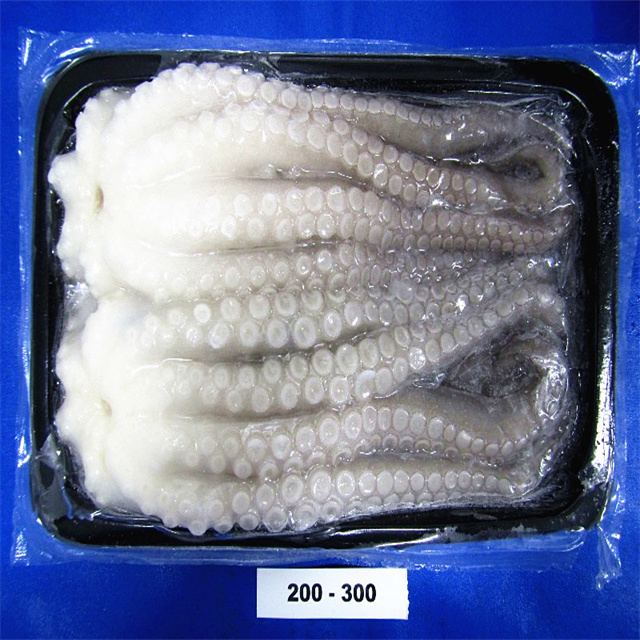
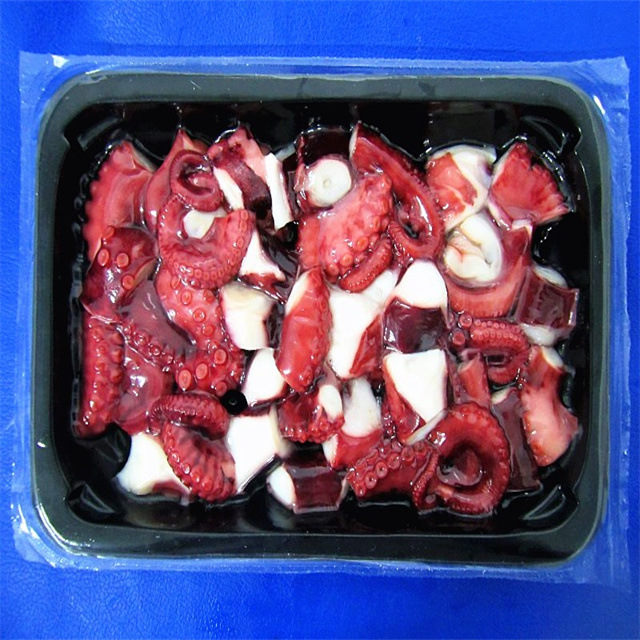
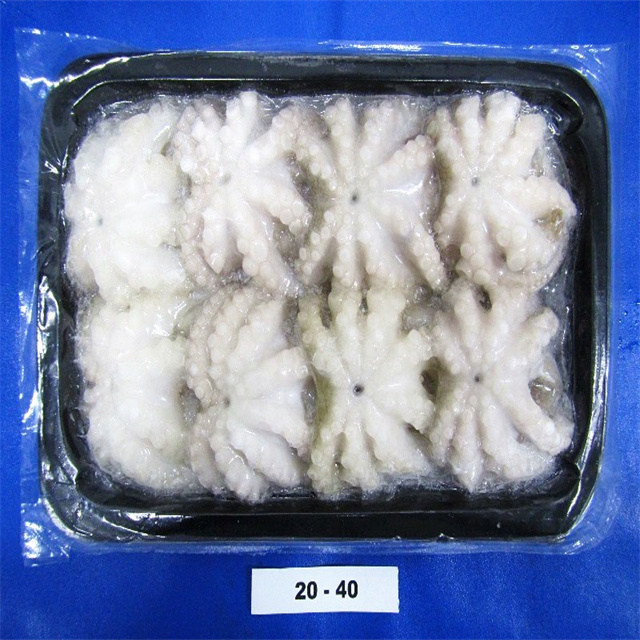
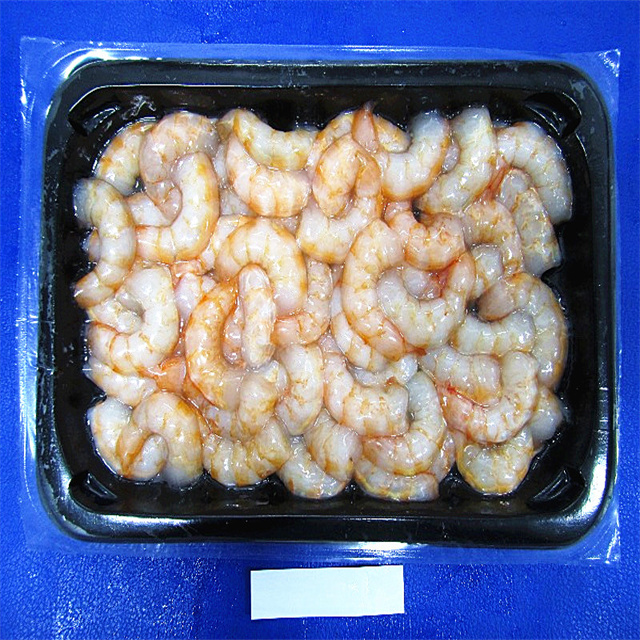
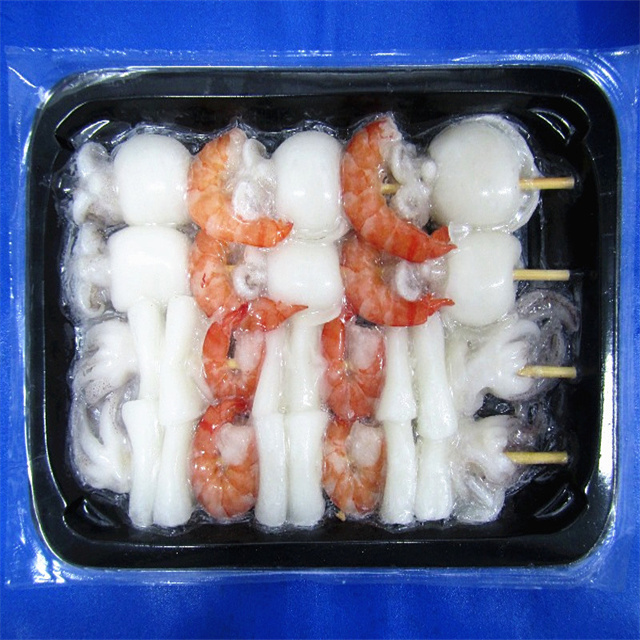
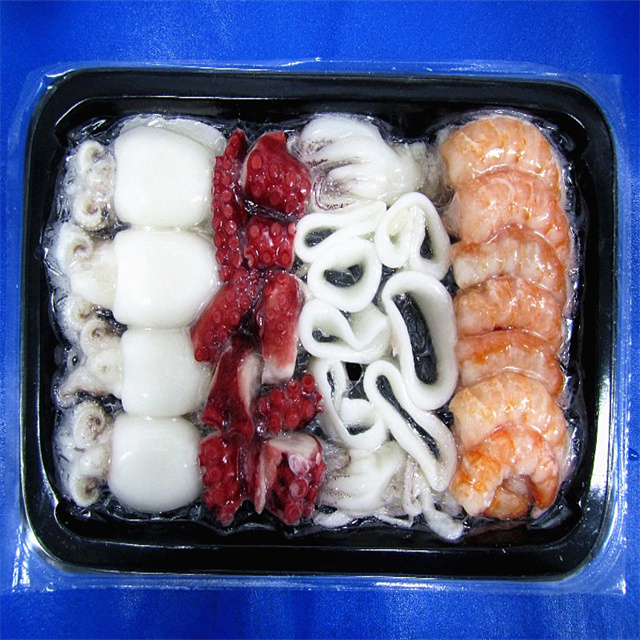
Skin Pack Food Products
Vacuum Skin Packaging for Seafood IDEAL provides matched vacuum skin packaging films, trays and packaging machines for fish processors, seafood exporters, central processing facilities and retail-ready seafood brands. Seafood VSP packaging is not based on one standard film or tray specification. A salmon fillet, shell-on lobster tail and frozen whole fish place very different demands on film stretch, puncture resistance, tray rigidity, barrier performance and machine tooling. To recommend a suitable package, we evaluate the seafood type, product profile, surface moisture, fresh or frozen condition, tray dimensions, required output and cold-chain environment.
Skin packaging to meet various seafood needs
When it comes to high-quality foods such as seafood, it is evident that they have various requirements for packaging. Liquids must not leak, and the packaging must protect the product from external influences. Vacuum skin packaging perfectly meets these needs. The upper film gently conforms to the shape of the product like a second layer of skin, and is fully sealed with a rigid lower film or preformed box, ensuring that the product is not squeezed or displaced. The product can be hung on a shelf, displayed upright or flat without slipping.
Even for high-demand products, they can be packaged perfectly
Vacuum skin packaging is highly suitable for high-quality products in the food industry that boast a long shelf life. Vacuum skin packaging is used to package products with juices, and even hard or sharp bone-in products are a breeze for the soft yet sturdy skin packaging!
Vacuum skin packaging application
We offer a range of films, including base films and top films of varying quality, tailored to suit different product shapes and heights, in order to achieve the most perfect packaging results.
Extend the retention period
The packaging design, coupled with a transparent and high-quality top film, ensures that the customized design highlights the product display effect. Through vacuum sealing, both you and the consumers can benefit from an extended shelf life and enhanced product safety.
The following table provides an initial selection guide. Final film, tray and machine compatibility should be confirmed through packaging tests using the actual seafood product.
| Seafood Product | Main Packaging Risks | Recommended Starting Point | What Should Be Tested |
|---|---|---|---|
| Salmon, cod, tuna and other fish fillets | Delicate texture, drip, oxidation and product movement | High-clarity skin film with a rigid plastic tray or coated board | Film conformance, liquid control, seal appearance and chilled storage |
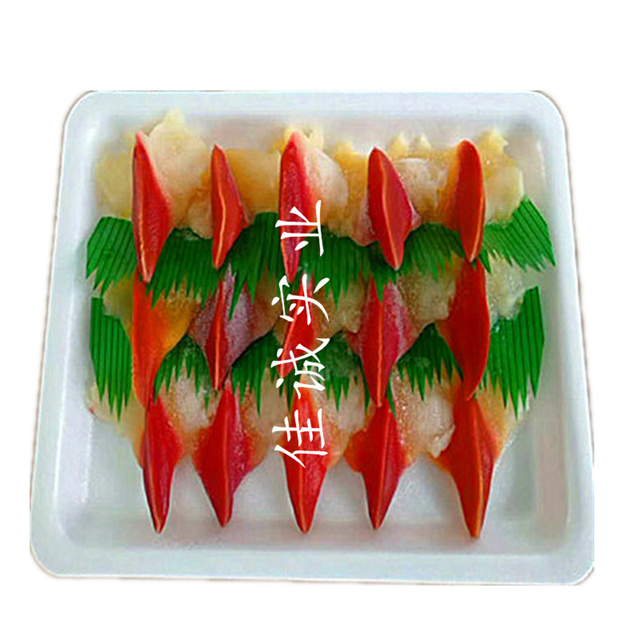
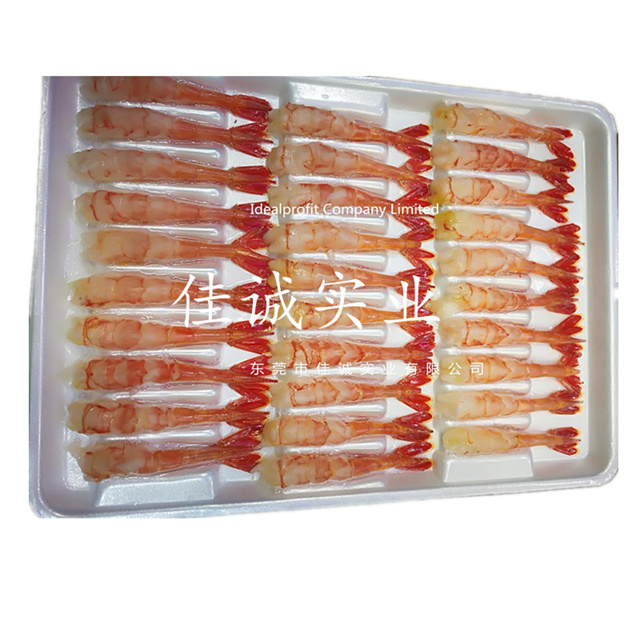
| Shrimp, prawns and scallops | Surface moisture, small product movement and uneven loading | Flexible skin film with good tray adhesion and a tray sized to control movement | Seal contamination, product fixation and pack presentation |
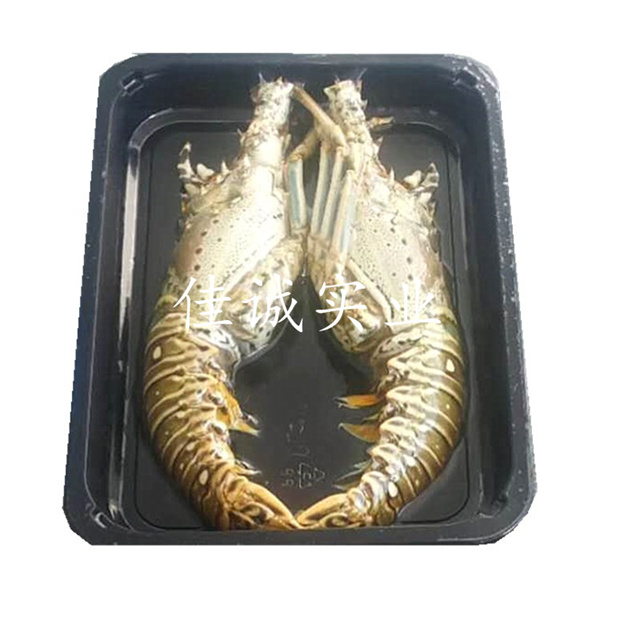
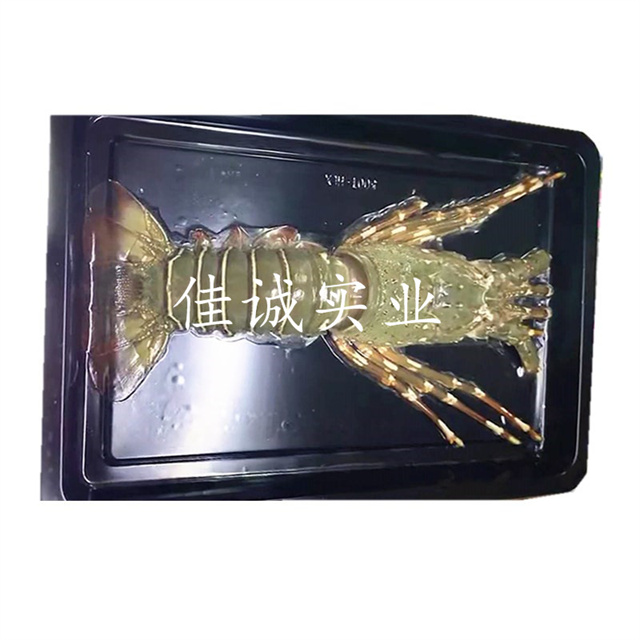
| Crab, lobster and shell-on seafood | Hard shells, sharp edges and high product profiles | Puncture-resistant VSP film with a rigid tray and adequate forming space | Pinhole formation, film thinning, leakage and transport handling |
| Oysters, mussels and clams | Sharp shell edges, liquid and irregular shapes | High-strength skin film and a stable tray with a clean sealing flange | Puncture resistance, flange sealing and cold-chain integrity |
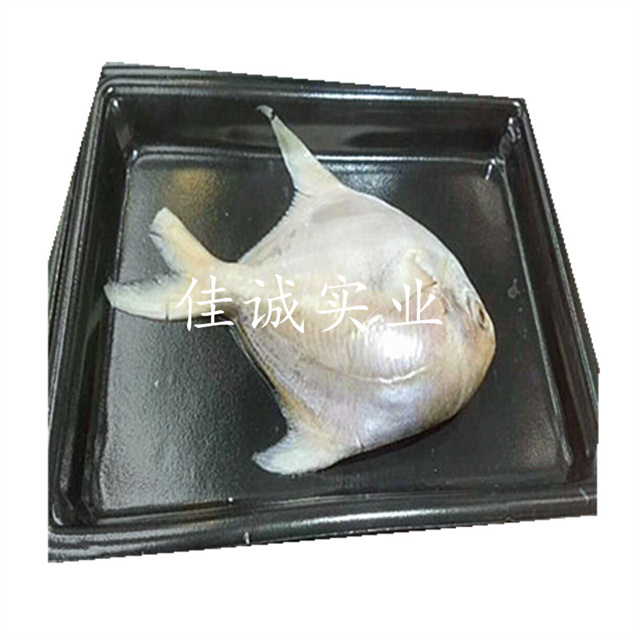
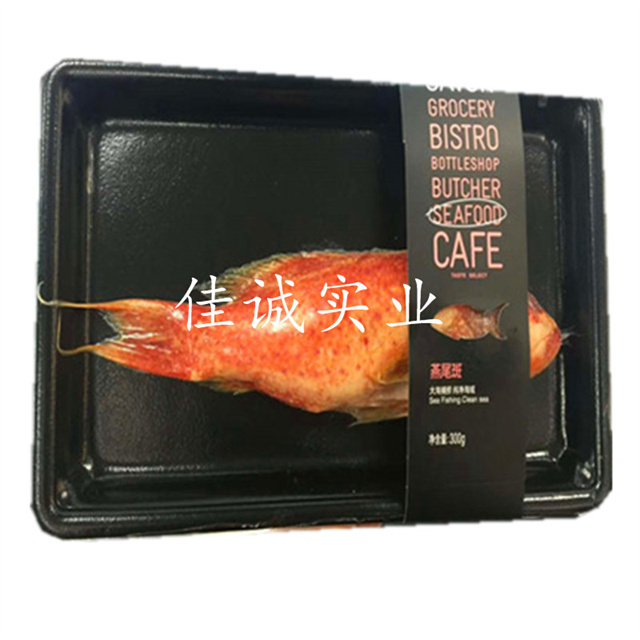
| Whole fish and fin-on portions | Fins, bones, irregular height and large pack dimensions | High-stretch or puncture-resistant film with custom-sized trays and tooling | Film stress around fins, maximum product height and seal continuity |
| Smoked or marinated seafood | Oil, seasoning, surface moisture and aroma retention | Barrier film selected according to product composition and storage target | Seal contamination, barrier requirement and final shelf-life validation |
| Frozen seafood | Low-temperature stress, ice edges and freeze–thaw handling | Freezer-compatible film and tray structure | Low-temperature flexibility, cracking, leakage and post-thaw integrity |
For broader project planning and application information, visit our seafood skin packaging solutions page.
A reliable package depends on the compatibility of the film, tray, sealing layer and machine—not on one component alone.
Film selection should consider:
For crab, lobster, shellfish and whole fish with sharp fins, evaluate our puncture-resistant vacuum skin packaging film.
When oxygen-barrier performance is the main requirement, view our EVOH high-barrier VSP film.
A seafood tray should provide sufficient rigidity during vacuum forming, cold storage, transport and retail display. The flange and sealing surface must also be compatible with the selected top film.
Available options include:
Please provide the tray material, outside dimensions, internal depth, flange width and product height when requesting a compatibility review.
Machine selection depends on the tray format, film width, packaging output, number of seafood SKUs and required level of automation.
Before selecting equipment, confirm the maximum tray dimensions, product protrusion height, tooling arrangement, film width, utilities and expected packs per hour.
IDEAL can help seafood processors match the three core parts of a vacuum skin packaging system:
This coordinated approach helps reduce the risk of purchasing a film, tray or machine that cannot operate reliably with the other packaging components.
Contact IDEAL to request film and tray samples, machine matching or a customized seafood VSP packaging quotation.
Vacuum skin packaging can be evaluated for fish fillets, salmon portions, tuna, cod, shrimp, prawns, scallops, crab meat, lobster tails, whole fish, smoked seafood and selected shellfish. Sharp or high-profile products require additional film and tooling evaluation.
Crab, lobster, mussels and other shell-on seafood generally require greater puncture resistance than smooth fish fillets. The final film structure should be selected according to shell sharpness, product height, storage temperature and tray configuration.
Not automatically. Frozen storage introduces different flexibility, impact and freeze–thaw requirements. Inform the supplier of the lowest storage temperature and whether the seafood is packed before or after freezing.
Plastic trays provide rigidity and are widely used for wet seafood products. Coated paperboard may be considered for selected retail formats, but moisture resistance, film adhesion and cold-chain performance must be tested before bulk use.
Compatibility depends on the machine model, film width, heating system, tray tooling and sealing conditions. Provide the machine nameplate, manual or current film specifications for evaluation.
Film thickness cannot be selected from seafood type alone. Product height, sharp edges, required stretch, tray dimensions, storage temperature and machine forming conditions must all be considered.
No fixed shelf life should be guaranteed without product-specific validation. Raw material quality, microbial load, processing hygiene, package barrier, seal integrity and cold-chain temperature all affect the final result.
Yes. Send the seafood dimensions, photos, tray information, machine model and storage requirements so that suitable film or tray samples can be selected for testing.